

Business Analyst vs Data Analyst: Defining the Two Roles
There are a lot of chances in the world of analytics, but it’s easy to become lost in the job titles and duties. The question of business analyst vs data analyst often emerges when professionals or graduates seek clarity about their future. Even though these jobs all adore getting insights from data, they are different in terms of their focus, methods, and overall effects.
What Is a Business Analyst?
A business analyst helps connect corporate goals with technology solutions. This role involves deep dives into organizational processes, pinpointing bottlenecks, and designing actionable strategies that elevate performance. What business analysts do is more than analyze these professionals act as translators, converting complex requirements into clear, implementable plans. Their communication and critical thinking skills blend empower teams to execute change seamlessly.
What Is a Data Analyst?
Business analysts look at strategy, but data analysts look at the “why” behind the numbers. What a data analyst is, is answered by examining their day-to-day: transforming raw figures into visualizations, reports, and stories that inform more intelligent decisions. Their toolkit includes statistical models, coding languages, and visualization platforms. The work of a data analyst is foundational for organizations that want to make sense of trends, measure outcomes, and forecast the future.
Business Analyst vs Data Analyst: Key Distinctions
Understanding the nuances of business analysis vs. data analysis is vital for anyone planning a career in analytics. The primary divergence lies in their mission: business analysts steer organizational direction, while data analysts illuminate patterns. Tools, deliverables, and stakeholders vary, but their end goal is unified organizational progress.
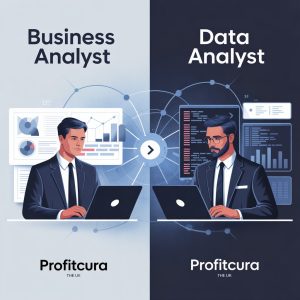
Data Analyst vs Business Analyst: Day-to-Day Impact
The data analyst vs business analyst debate is best illustrated through a typical workday. Business analysts facilitate workshops, document requirements, or outline new business processes. Meanwhile, data analysts crunch numbers, design dashboards, and interpret statistical significance. Both roles champion evidence-based action, but their perspectives and deliverables remain distinct.
Data Analyst vs Business Intelligence Analyst: Where Does the Line Blur?
Another layer of complexity is the comparison: data analyst vs business intelligence analyst. Data analysts work on analyzing and conveying stories with data, whereas business intelligence analysts build the tools that store and handle the data. Their expertise lies in building and maintaining reporting infrastructure, ensuring data flows seamlessly from collection to insight.
What Does a Business Analyst Do?
Curious about the specifics? Here are the core responsibilities:
-
Gather and document business requirements.
-
Map and evaluate business processes for improvement.
-
Collaborate with diverse teams to design solutions.
-
Develop test cases and support implementation.
-
Monitor outcomes and recommend refinements.
What Does a Data Analyst Do?
Now, what does a data analyst do? Key tasks include:
-
Collect and clean raw data from multiple sources.
-
Develop visualizations and reports for stakeholders.
-
Apply statistical techniques to uncover trends.
-
Support decision-making with actionable insights.
-
Automate recurring reporting tasks.
How to Become a Business Analyst
Breaking into this career requires strategic preparation. Here’s a roadmap:
-
Acquire foundational business and technology knowledge.
-
Hone communication and critical-thinking skills.
-
Pursue certifications in business analysis.
-
Seek real-world experience through internships or junior roles.
-
Build a portfolio of successful project outcomes.
How to Become a Data Analyst
Aspiring data analysts can follow this pathway:
-
Study statistics, programming, and data visualization.
-
Learn how to use tools like SQL, Tableau, or Python well.
-
Complete relevant certifications or online courses.
-
Undertake projects that showcase analytical skills.
-
Network with industry professionals and seek mentorship.
Which job is better for you: business analyst or data analyst?
It all comes down to what you like when it comes to choosing between a business analyst and a data analyst. business analyst path may inspire you if you thrive on process improvement and stakeholder collaboration. Those who enjoy interrogating datasets and uncovering actionable insights might find fulfillment as a data analyst. Profitcura recommends exploring both avenues through job shadowing and coursework to discover your unique strengths.
Five Unique Insights: Business Analyst vs Data Analyst
Strategic Influence: Business analysts drive organizational change, while data analysts provide the evidence for those changes.
Business analysts employ modeling tools and documentation frameworks, while data analysts use statistical software and coding languages.
Stakeholder Interaction: Business analysts manage conversations across departments; data analysts primarily interact with data teams.
Deliverables: Business analysts produce process maps and requirement docs; data analysts deliver dashboards and data stories.
Career Growth: Both offer advancement, but business analysts often transition to leadership, while data analysts can evolve into data science or business intelligence.
Business Analyst in the Modern Organization
Today, the business analyst business function is central to digital transformation. Analysts are embedded across industries, unlocking efficiencies and ensuring technology investments align with real-world needs. Profitcura champions a holistic approach, ensuring analysts are both catalysts for change and trusted advisors.
Essential Instructions for Aspiring Analysts
-
Focus on building communication and problem-solving abilities.
-
Explore internships or mentorships for hands-on experience.
-
Keep up with the latest in analytics and business strategy.
-
Avoid confining your skills cross-train in both business and data domains.
The Future of Analytics: Collaboration, Not Competition
The comparison of business analyst vs data analyst shouldn’t be considered a contest. Forward-thinking organizations understand the synergy between these roles. By embracing collaboration, they unlock richer insights and deliver greater value. Profitcura’s mission is to help you find the analytics role that empowers your potential, ensuring satisfaction and growth.
FAQs
What is a business analyst, and what value do they bring?
A business analyst identifies organizational needs and shapes solutions, improving workflows and facilitating strategic growth.
How does a data analyst’s vs a business analyst’s role differ in daily work?
While data analysts interpret complex datasets, business analysts focus on translating insights into actionable business strategies.
What is a data analyst responsible for in a company?
A data analyst collects, cleans, and interprets numerical data to help organizations understand trends and inform decisions.
How does a data analyst vs a business intelligence analyst position compare?
Data analysts analyze raw information, while business intelligence analysts develop systems and dashboards to visualize business metrics.
What does a business analyst do during project planning?
Business analysts collaborate with stakeholders to define requirements and establish clear project objectives.
What steps are needed to become a data analyst?
Start with learning statistical methods, mastering data tools, and building hands-on experience through projects or internships.
How to become a business analyst in today’s job market?
Develop strong analytical thinking, gain experience in process improvement, and pursue relevant certifications to launch your career.
Visit Our Other Blogs
https://profitcura.co.uk/2024/10/30/expert-power-bi-consultancy/
https://profitcura.co.uk/2024/10/26/data-integration/
https://profitcura.co.uk/2024/10/24/microsoft-business-intelligence-insights-from-profitcura/
https://profitcura.co.uk/2024/11/02/microsoft-excel-solutions/