

What Is Learning in Machine Learning and How It Works
Opening up the mysteries behind artificial intelligence starts with a single question: What is learning in machine learning? This concept forms the backbone of intelligent systems, empowering technology to adapt, predict, and revolutionize how we interact with data. Let’s embark on a journey to unravel its core, exploring the essence of how machines “learn” and why it matters.
The Core of Intelligence: What is Learning in Machine Learning?
At its heart, learning in machine learning refers to a method where systems are designed to extract patterns, insights, and predictions from data without being explicitly programmed for every scenario. Unlike traditional algorithms, which follow rigid instructions, these models dynamically evolve, sculpting their abilities based on real-world experiences. Think of it as a digital mind constantly refining itself to perform smarter over time.
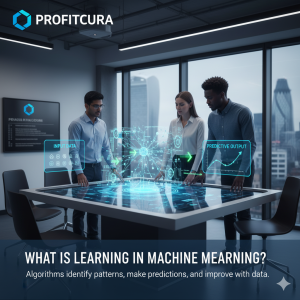
Machines don’t just memorize they internalize. Through exposure to vast datasets, algorithms identify relationships, correlations, and anomalies. This adaptive process is what distinguishes machine learning from static computing. Systems equipped with this capability are not bound by pre-written scripts; instead, they forge their knowledge, recalibrating with every new data point.
Types of Learning in Machine Learning
The realm of what is learning in machine learning is rich with diversity. Here’s a snapshot of its main types, each offering unique advantages:
1. Supervised Learning: Guided Intelligence
What is supervised learning? Imagine a teacher providing answers during an exam. In this scenario, algorithms receive labeled data input paired with correct output allowing them to map relationships and predict outcomes. This mechanism underpins applications like email filtering, fraud detection, and more.
2. Unsupervised Learning: Discovery Without Direction
Contrary to guided learning, unsupervised methods dive into unlabeled data. Here, models autonomously discover patterns, groupings, and anomalies without explicit guidance. This approach is pivotal for clustering, anomaly detection, and market segmentation.
3. Semi-Supervised Learning: The Best of Both Worlds
Blending the strengths of both methods, semi-supervised learning leverages a small set of labeled data with a large pool of unlabeled data. This hybrid ensures higher accuracy even when labeled resources are scarce.
4. Reinforcement Learning: Learning by Trial and Error
Inspired by behavioral psychology, reinforcement learning enables systems to learn by interacting with environments, receiving feedback in the form of rewards or penalties. It’s the backbone of robotics, gaming, and autonomous driving.
5. Deep Learning: Layers of Understanding
Have you ever pondered over the concept of deep learning? Deep learning models mimic the human brain’s neural networks, employing multiple layers to identify sophisticated patterns. These architectures power voice assistants, image recognition, and advanced language models.
Beyond Basics: Emerging Paradigms in Machine Learning
As technology advances, new learning paradigms reshape the landscape:
-
What is federated learning: A decentralized approach where multiple devices collaboratively learn a shared model while keeping data localized, preserving privacy.
-
What is deep machine learning: An evolution of deep learning, focusing on ultra-complex neural architectures for unprecedented accuracy.
-
What deep learning: Deep learning refers to the hierarchical method of processing data through interconnected layers; the deeper the network, the more abstract the understanding.
-
Why Does Learning Matter?
Understanding what learning is in machine learning is essential for both businesses and everyday users. It’s the driving force behind voice recognition, personalized recommendations, predictive analytics, and more. By grasping how machines learn, we unlock the potential to harness smarter tools, streamline operations, and innovate across industries.
Key Takeaways: The Power of Learning in Machine Learning
-
Adaptive Evolution: Systems grow smarter with every interaction.
-
Data-Driven Insights: Patterns and predictions emerge from experience.
-
Scalable Intelligence: Models adapt seamlessly to new scenarios.
-
Real-World Impact: From healthcare to finance, applications are vast.
-
Continuous Improvement: Feedback loops drive perpetual enhancement.
Interlinking Wisdom: Exploring Related Concepts
To deepen your understanding, consider the following topics:
-
What is a learning machine: Delve into the hardware and algorithms that enable adaptive intelligence.
-
Machine learning: What it is: Explore broader applications and real-world examples.
-
What is artificial intelligence and machine learning: Discover the relationship between AI and its learning subset.
-
What is supervised machine learning: Understand the significance of guided learning in practical deployments.
A Glimpse into the Future: The Evolution Continues
As algorithms become more advanced, the boundaries of what is learned in machine learning are constantly expanding. From enhancing user experiences to driving self-sufficient systems, the evolution of learning mechanisms holds boundless promise. With every innovation, technology inches closer to genuine understanding, blurring the lines between programmed responses and true intelligence.
The journey of what is learning in machine learning is one of perpetual discovery. By grasping its intricacies, we unlock doors to smarter solutions, intuitive systems, and limitless possibilities. Whether you’re a curious reader or a forward-thinking business, understanding this foundation is crucial for navigating the intelligent future.
Frequently Asked Questions
1. How does a learning machine improve its performance over time?
A learning machine refines its predictions and actions by processing new data, continuously enhancing its accuracy and adaptability.2. What distinguishes deep learning from traditional machine learning?
Deep learning employs multi-layered neural networks to recognize complex patterns, while traditional methods use simpler algorithms for data analysis.3. How is artificial intelligence related to machine learning?
Artificial intelligence encompasses various techniques, with machine learning serving as a core method for enabling systems to learn from experience.4. What makes supervised machine learning unique?
Supervised machine learning uses labeled data to train models, ensuring precise mappings between inputs and desired outputs.5. Why is federated learning important for data privacy?
Federated learning allows devices to collaborate on model training without sharing sensitive data, maintaining user confidentiality.6. In what scenarios is deep machine learning most effective?
Deep machine learning excels in fields like image analysis, speech recognition, and autonomous vehicles due to its advanced pattern recognition.7. What are the main benefits of using AI deep learning in businesses?
AI deep learning streamlines decision-making, automates tasks, and uncovers valuable insights, driving innovation and efficiency. -